
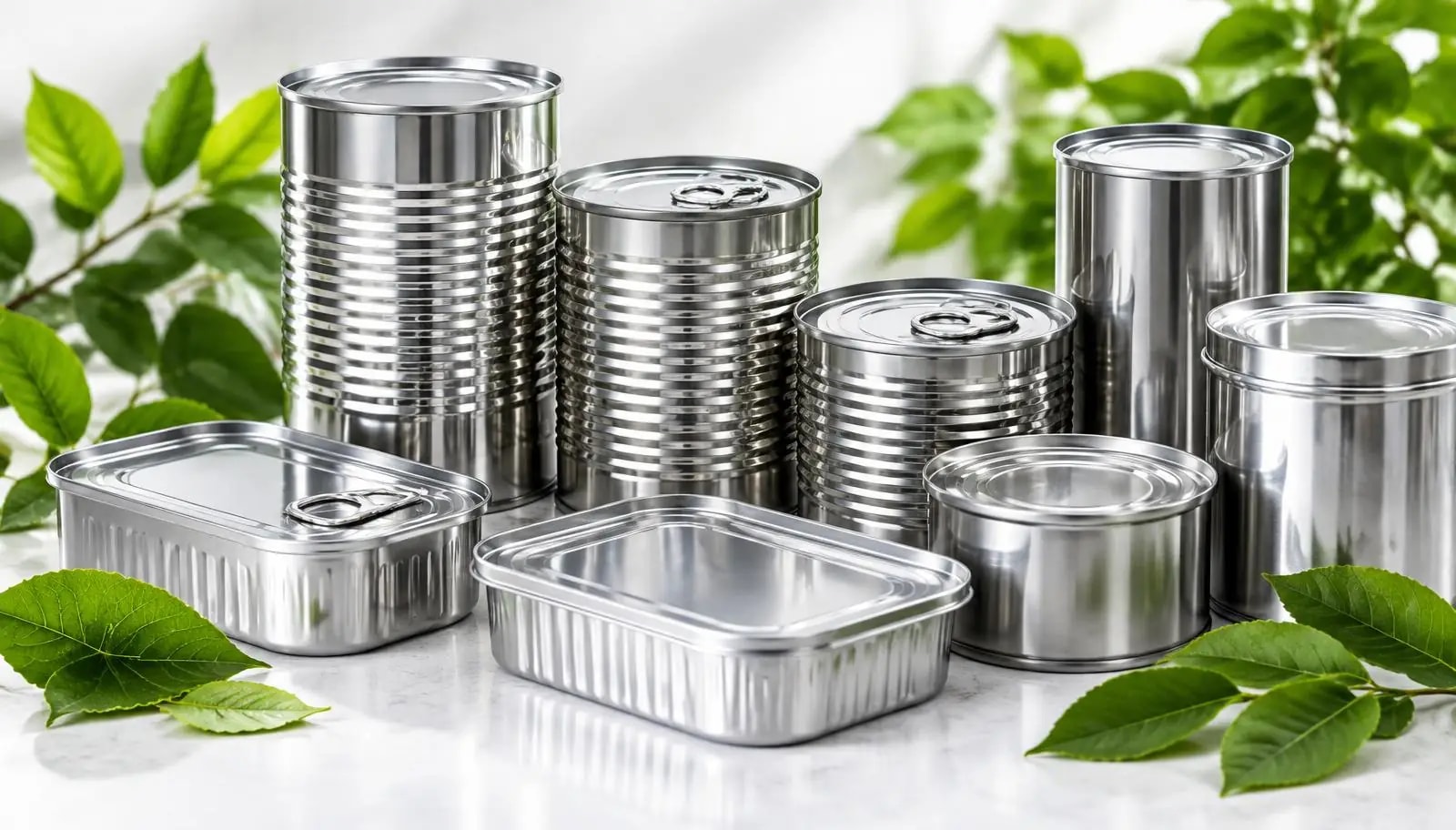
Sustainability
Metal Containers Sustainability
Why steel cans and containers are the sustainable choice: endlessly recyclable, hygienic, non-reactive and a clear win over plastic packaging.
Why metal
Packaging that protects the product and the planet
Recyclable packaging
Steel can be recycled again and again without losing strength or quality. Used cans are easily separated with magnets and go straight back into new steel.
Hygienic
A sealed steel can is a complete barrier to light, air, moisture and germs, keeping food safe for long periods without refrigeration or preservatives.
Non-reactive
Lacquered tinplate does not pass chemicals into oils, ghee, food or paints, protecting taste, aroma and product quality.
Strong and tamper-evident
Metal resists crushing, puncture and heat in transit, and seams show clearly if a pack has been opened.
Longer shelf life
Better protection means less spoiled product — which is often the biggest environmental cost of any pack.
Ready for printing
Printed directly on the metal, so no extra plastic labels or sleeves are needed.
Metal vs plastic
How steel containers compare with plastic
| Factor | Steel containers | Plastic containers |
|---|---|---|
| Recycling | Recycled endlessly with no loss of quality | Loses quality each time; much is downcycled or landfilled |
| Collection | Separated easily by magnets | Many types that are hard to sort |
| Barrier to light, air and moisture | Complete barrier | Partial; oxygen and light can pass |
| Reaction with contents | Non-reactive with lacquer lining | Can pass chemicals into oils and fatty foods |
| Heat and strength | Withstands heat, sterilisation and stacking | Softens with heat; dents and cracks |
| Microplastics | None | Breaks down into microplastics |
| Value as scrap | High — sold back into steelmaking | Low |